
NULL LABS
Where formulas and concepts are born and most of them die.
Every bait in the lineup started here — in the lab, on the bench, in the water. NULL LABS is our open R&D log. The experiments that worked, the ones that didn't, and everything in between.

EXPERIMENT LOG
Plastisol Clarity & Performance
MAT-001 compared six leading plastisol formulas under identical conditions — same molds, same equipment, same process — measuring clarity, bubbles, density, feel, stretch, tear resistance, buoyancy, and heat stability.
Brand D // Bait Plastics 142/152 produced the strongest overall performance: exceptional optical clarity, a supple finished feel, dependable action, and the most consistent pouring characteristics throughout testing.
Brand F // Dead On Plastix White Label and Brand E // Soft Plastics Crystal Clear are both being advanced as qualified and approved alternates.
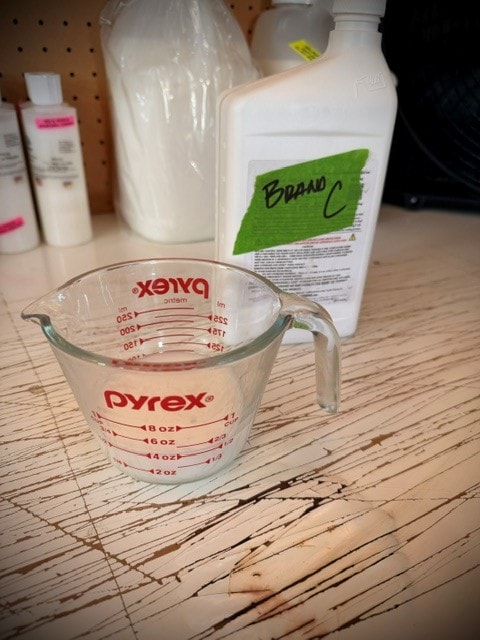
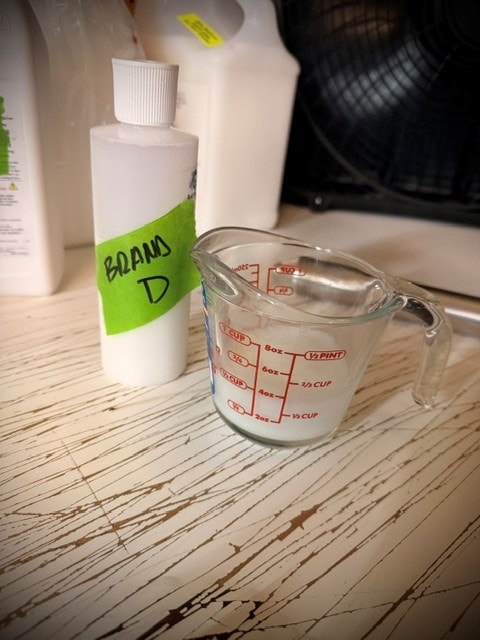
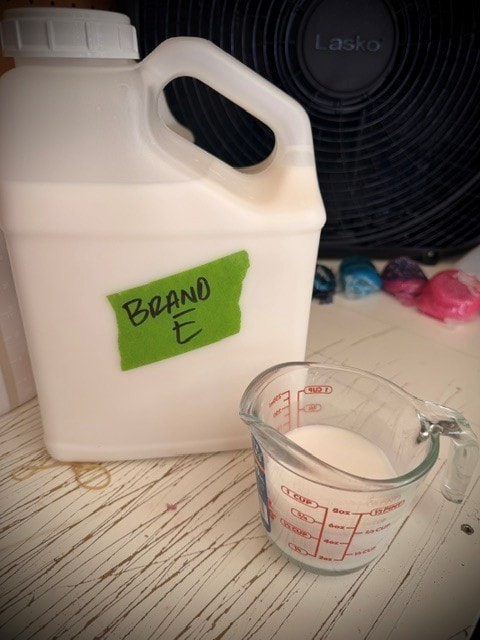
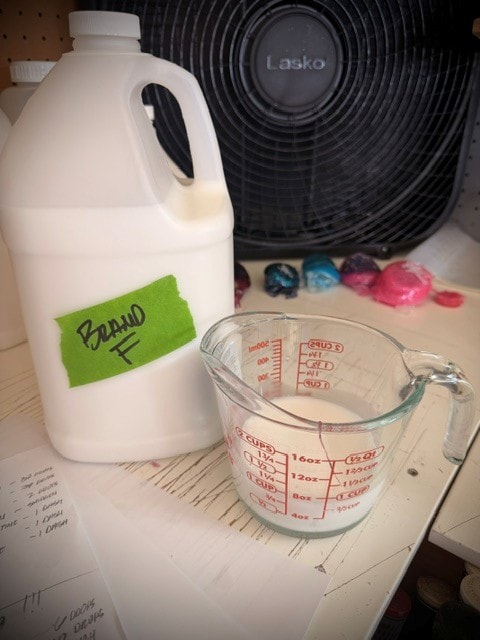
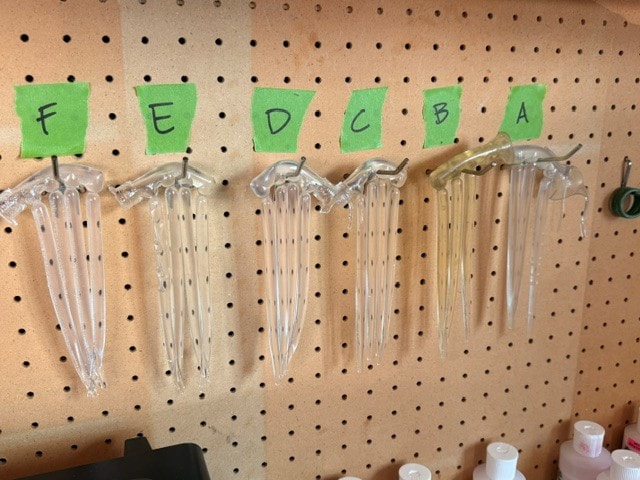
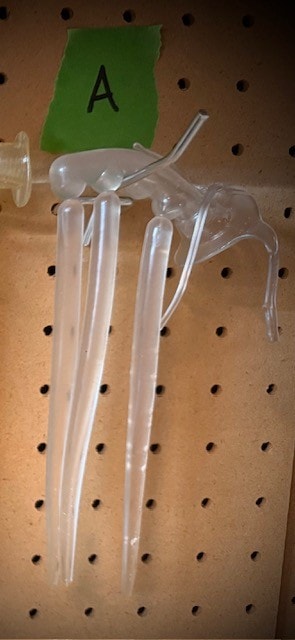
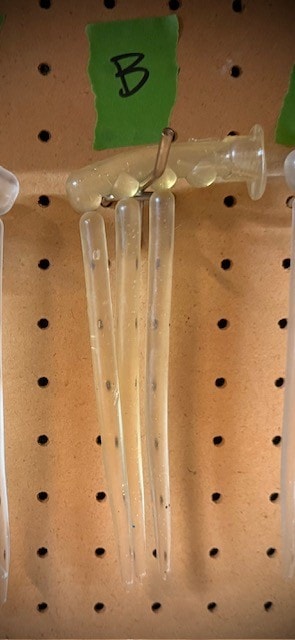
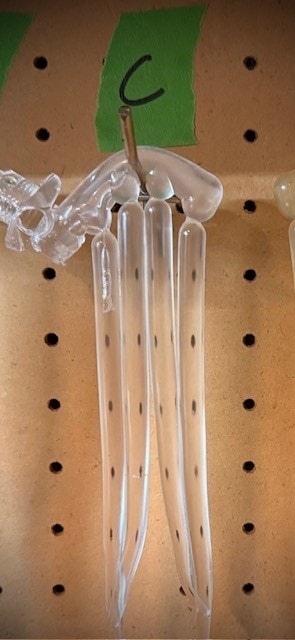
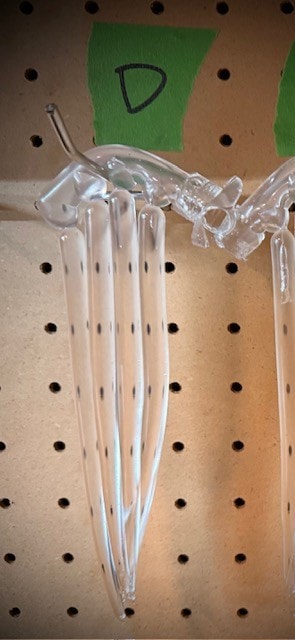
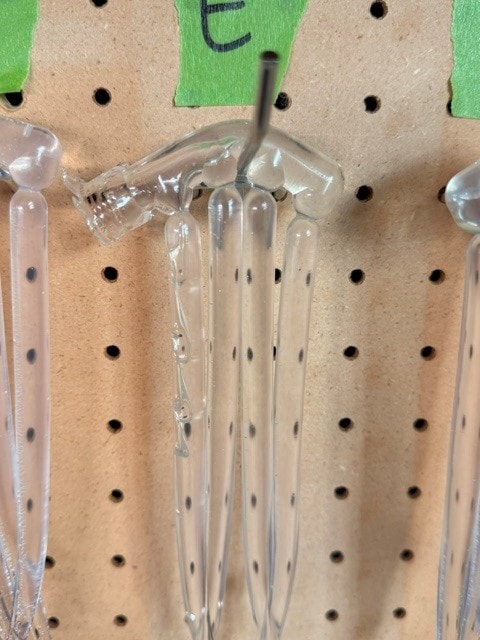
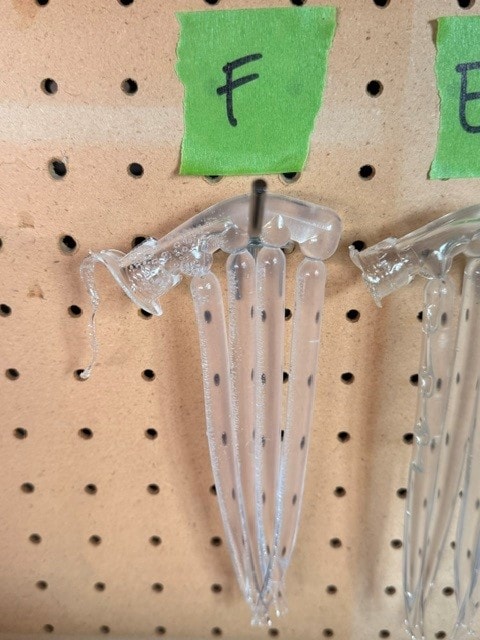
Compare SIX leading plastisol formulas under identical conditions — same molds, same equipment, same process — measuring clarity, bubbles, density, feel, stretch, tear resistance, buoyancy, and heat stability.
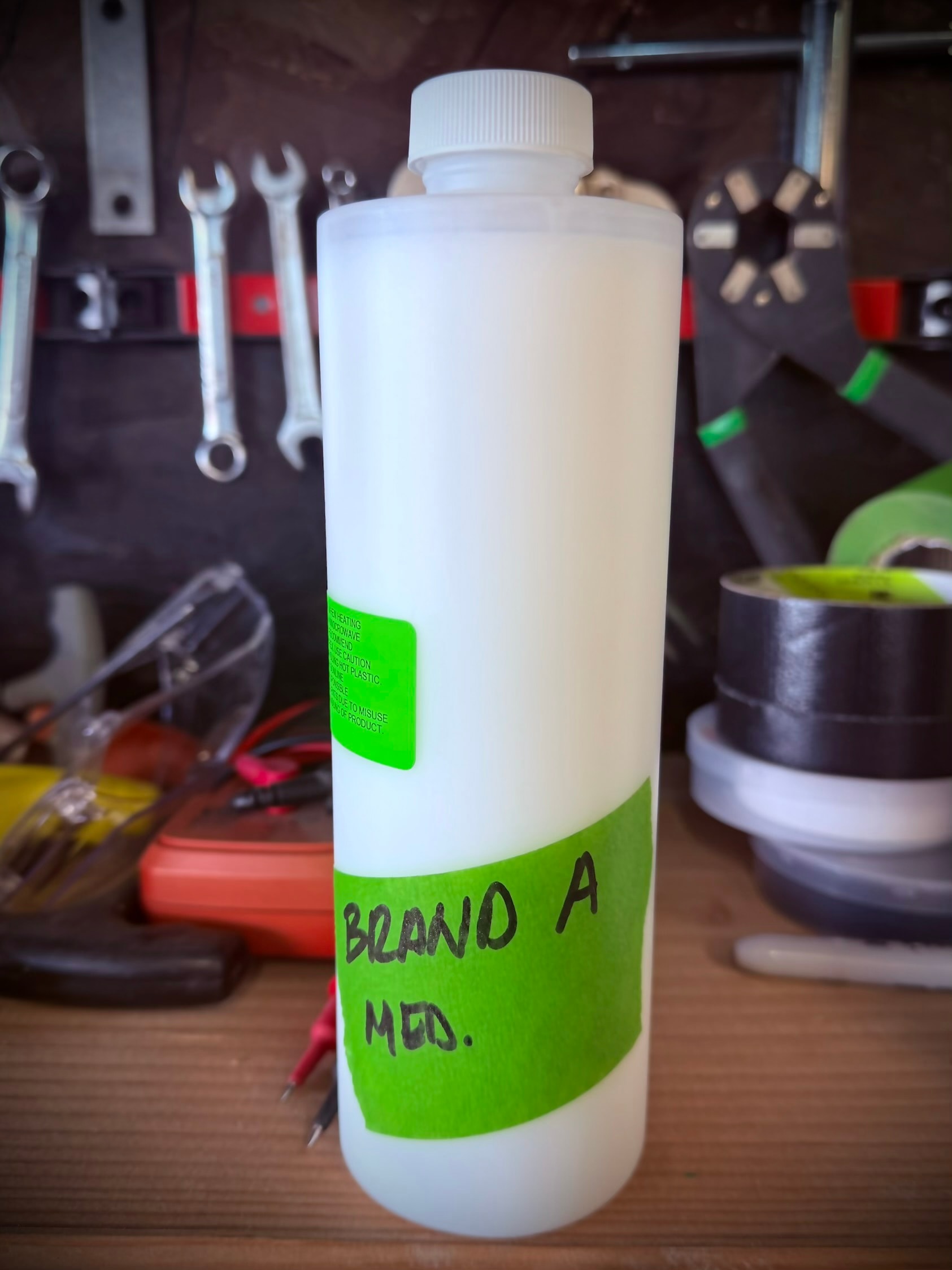
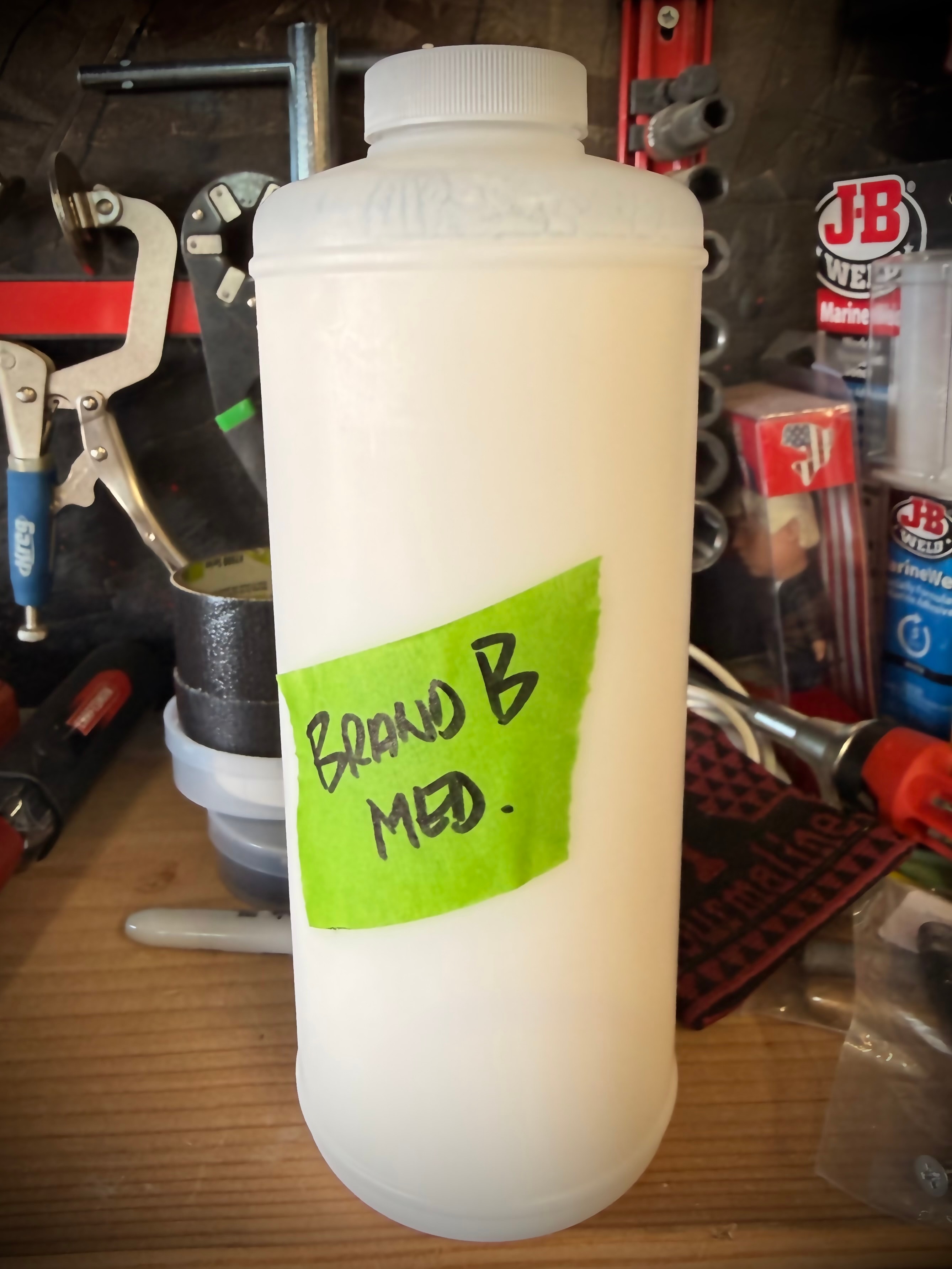
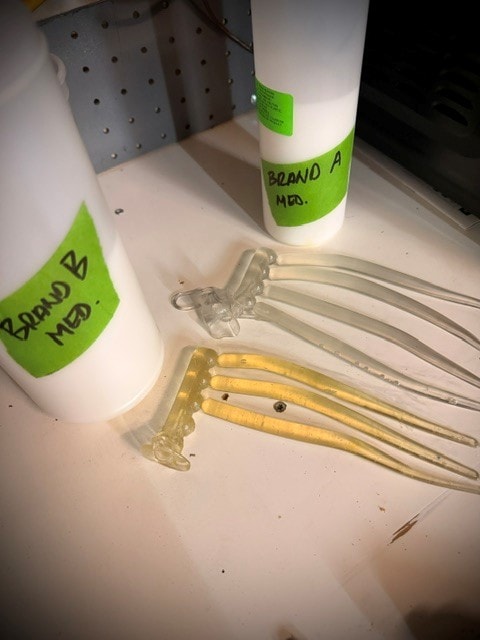
2026-08-30 // BRAND B — TEST RESULT: FAILED Brand B has been removed from consideration for MAT-001 following significant issues observed during preparation, processing, and evaluation. Most notably, Brand B demonstrated a substantially lower thermal tolerance and scorch threshold, making consistent heating and processing extremely difficult. The finished material was also considerably more rigid than Brand A and did not provide the flexibility or action required for the NT-001 bait profile. Odor during heating was pronounced and significantly stronger than Brand A. Additionally, unidentified organic material was observed within the plastisol itself. All samples had been stored in closed cabinets away from potential contaminants, and cookware is routinely cleaned and stored in a protected, dust-safe environment. Based on those controls, no obvious external source of contamination was identified. Clarity was another significant concern. Brand B exhibited a noticeable yellow cast and reduced transparency, falling well below the clarity standard being sought through MAT-001. Brand B was not without potential strengths. Its increased rigidity may prove useful for certain applications requiring a firmer material, particularly larger or denser swimbaits. However, achieving repeatable results would likely require a much more tightly controlled heating protocol. MAT-001 CONCLUSION: Brand B does not meet the performance requirements established for the current Null Theory bait lineup and has been eliminated from further consideration. STATUS: FAILED // NO ADVANCEMENT
Brands C, D & E hit the bench on 2026-09-01. Final evaluation confirmed standout performance from Brand D, with Brand E and Brand F approved as qualified alternates.
NT-MAT-001 // PRODUCTION PLASTISOL Base Material: Bait Plastics 142/152 Qualification: MAT-001 Status: VALIDATED // PRODUCTION APPROVED
BRAND D // BAIT PLASTICS 142 Brand D produced the strongest overall performance of the materials tested. It delivered the best fishability and action, the most desirable supple finished feel, exceptional optical clarity, and the most consistent and predictable pouring characteristics throughout testing. It did not win every category. Brand F // Dead On Plastics White Label demonstrated the best toughness and lowest odor during heating. Brand E // Soft Plastics Crystal Clear also produced outstanding transparency. Brand C // X-Sol performed admirably throughout testing. But EXP-001 was never about finding the material that won a single category. It was about finding the material that best represented what a Null Theory bait should be. That material is Bait Plastics 142.
Brand D // Bait Plastics 142/152 production approved.
Brand E (Dead On Plastix White label) and Brand E (Soft Plastics Crystal Clear) are BOTH being advanced as qualified and approved alternates.
Completed.
MAT-001 FINALIZED — Bait Plastics 142/152 is validated as the production plastisol for Null Theory Baits.
Evaluate LureWorks Pourasol Pro as a candidate for primary production plastisol based on clarity and finished appearance.
Material: LureWorks Pourasol Pro Status: Adopted as Null Theory's primary production plastisol Pourasol Pro was tested after a recommendation to evaluate its clarity and finished appearance. The result was immediate: the material cured with a level of transparency that was shockingly good — clear enough to noticeably improve how our resin pigments, specialty micas, flash systems, and core-shot constructions present in the finished bait. That clarity directly supports the direction Null Theory is moving toward. Many of our colors depend on light passing through the bait, revealing internal cores, layered pigments, and reflective materials rather than simply sitting on the surface. Because of that performance, we made the decision to transition to LureWorks Pourasol Pro as our primary plastisol going forward.
LUREWORKS POURASOL PRO Observed advantages: - Exceptional optical clarity - Cleaner presentation of transparent pigments - Improved visibility of core-shot construction - Greater depth from mica and specialty reflective materials - Better fit for future laminate and Pelagic color development
LureWorks Pourasol Pro adopted as primary production plastisol.
The material was initially tested as a recommendation. Its clarity was strong enough to justify a full production change. Result: ADOPTED Null Theory Baits — Tested. Observed. Built Different.
Shad Tail Profile — Field Test
The Null Shad is locked on body and the results from MAT-001 testing will confirm material — the variable is the tail.
Four distinct tail profiles are entering field rotation: paddle, boot, dart and split. Each profile moves water differently and triggers different strike responses.
This test determines which tail generates the most consistent reaction and reactionary bites across conditions.
Determine which of four tail profiles — paddle, boot, dart, and split — generates the most consistent reaction and reactionary bites across conditions.
2026-09-03: Field testing is underway across three tail profiles so far: Split Tail, Paddle Tail, and Dart Tail. All three profiles have performed well and produced fish, reinforcing why each has become a proven design across the industry. However, an early pattern is beginning to emerge. The Split Tail profile currently holds the advantage. Across multiple outings and multiple test color formulations, the Split Tail has produced fish more consistently and at a higher observed frequency than the other profiles tested to date. The data is still developing, and testing will continue before a final conclusion is reached. But so far, the profile behind the NT-004 Null Shad is making a very strong case for itself. STATUS // FIELD TESTING CONTINUES EARLY LEADER // SPLIT TAIL
TBD
TBD
TBD
TBD
TBD
2026-09-06 - Chatfield Reservoir
TBD
Evaluate split-tail geometry against conventional tail profiles under real fishing conditions.
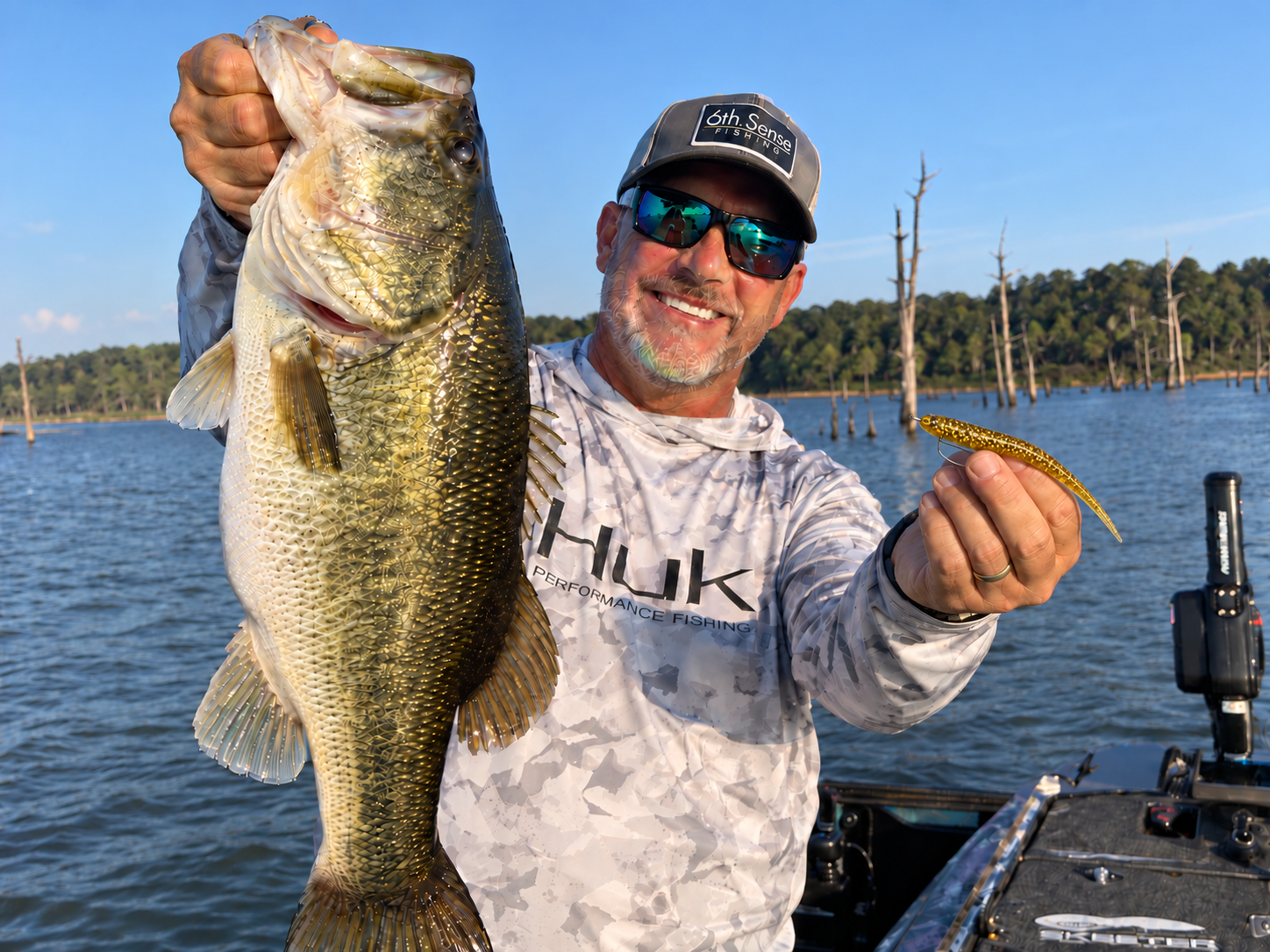
LOCATION: Quincy Reservoir // Aurora, Colorado PROGRAM: NT Labs // Field Testing SUBJECT: Split-Tail Geometry STATUS: Active Testing Sometimes the lab gives you an idea. Sometimes the water tells you to stop overthinking it. Testing of the split-tail concept has officially moved beyond the "this might work" stage. The original idea was simple: take the movement we're already getting from our soft-plastic profiles and change what happens at the very end of the bait. Instead of relying on a conventional dart tail or boot tail, split the tail and allow two independent sections of plastic to react to every movement of the bait. The difference in the water has become increasingly difficult to ignore. During a recent full day of testing at Quincy Reservoir in Aurora, Colorado, the split tail stayed tied on for essentially the entire session. Nine fish made it to the boat. Not one was under three pounds. That doesn't prove that a split tail will outperform every other tail design under every condition. That's not how we do things at NT Labs. But it absolutely earns our attention.
WHAT WE'RE SEEING The most interesting part isn't simply that fish are being caught. It's how little movement is required to make the bait work. The two tail sections react independently. Small rod movements create separation, vibration and secondary movement at the end of the bait. On the fall, the tail doesn't behave like one solid piece of plastic. When the bait stops, there can still be residual movement. Compared with the dart tails and boot tails we've been fishing alongside it, the split-tail presentation has repeatedly produced fish. And the gap is becoming noticeable. At this point, we're not ready to say why. It could be profile. It could be the independent tail movement. It could be the way the bait behaves during pauses. It could be something completely different that we haven't identified yet. That's exactly why we test.
THE QUINCY RESULT Nine fish in one trip is interesting. Nine quality fish is considerably more interesting. But one successful day doesn't become a conclusion simply because we like the result. So the next phase is straightforward: Repeat it. Different water. Different conditions. Different colors. Different retrieves. Different rigging. And, importantly, continue putting conventional tail geometries in the water beside it. If the split tail keeps producing while the alternatives don't, eventually coincidence becomes harder to argue. For now, we're recording exactly what happened: Quincy Reservoir. Nine fish landed. Every fish over three pounds. Split tail producing throughout the day. The experiment continues. NT LABS // TEST THE THEORY.
TBD
TBD
TBD
TBD
TBD
Scent & Attractant Formulation
Not all attractants are built the same — and most manufacturers won't tell you why.
We're testing three distinct fish attractant profiles head-to-head. Same worm. Same dosage. Same concentration. The only variable is the formula.
Each formula represents a different chemical approach to triggering a strike response — scent dispersion rate, amino acid profile, and oil-to-carrier ratio all differ across the three.
We're measuring reaction rate, hold time, and repeat strike behavior across controlled sessions. No guessing. No marketing copy. Just data.
CHALLENGE THE NULL.
Test three distinct attractant profiles head-to-head — same worm, same dosage, same concentration — measuring reaction rate, hold time, and repeat strike behavior.
Testing is underway using FORM-001. This is a proprietary blend comprised of natural and synthetic scents. FORM-002 is a fully synthetic blend receiving it's finalized ratio makeup. Once completed, both formulas will be tested against one another to determine which formula works most efficiently and triggers more strikes across all conditions. Once this is completed, FORM-003 - FORM-007 will be tested alongside of the winner of FORM-001 vs. FORM-002.
UPDATE - 2026-09-21: FORM-003 makeup has been finalized. Currently, this formula is being tested on the water. With Fall coming quickly to Colorado, the profiles of baits will be changing as bass will start going deeper for the winter imminently. FORM-003 has compiled utilizing a sweeter and yet more deep sea oriented formulation. Early returns have been impressive. Impulsive strikes - even fish not currently active right now - have been observed.
TBD
TBD
TBD
TBD
TBD
TBD
Flake Loading Density
HOW MUCH FLAKE IS TOO MUCH FLAKE?
We intend to find out.
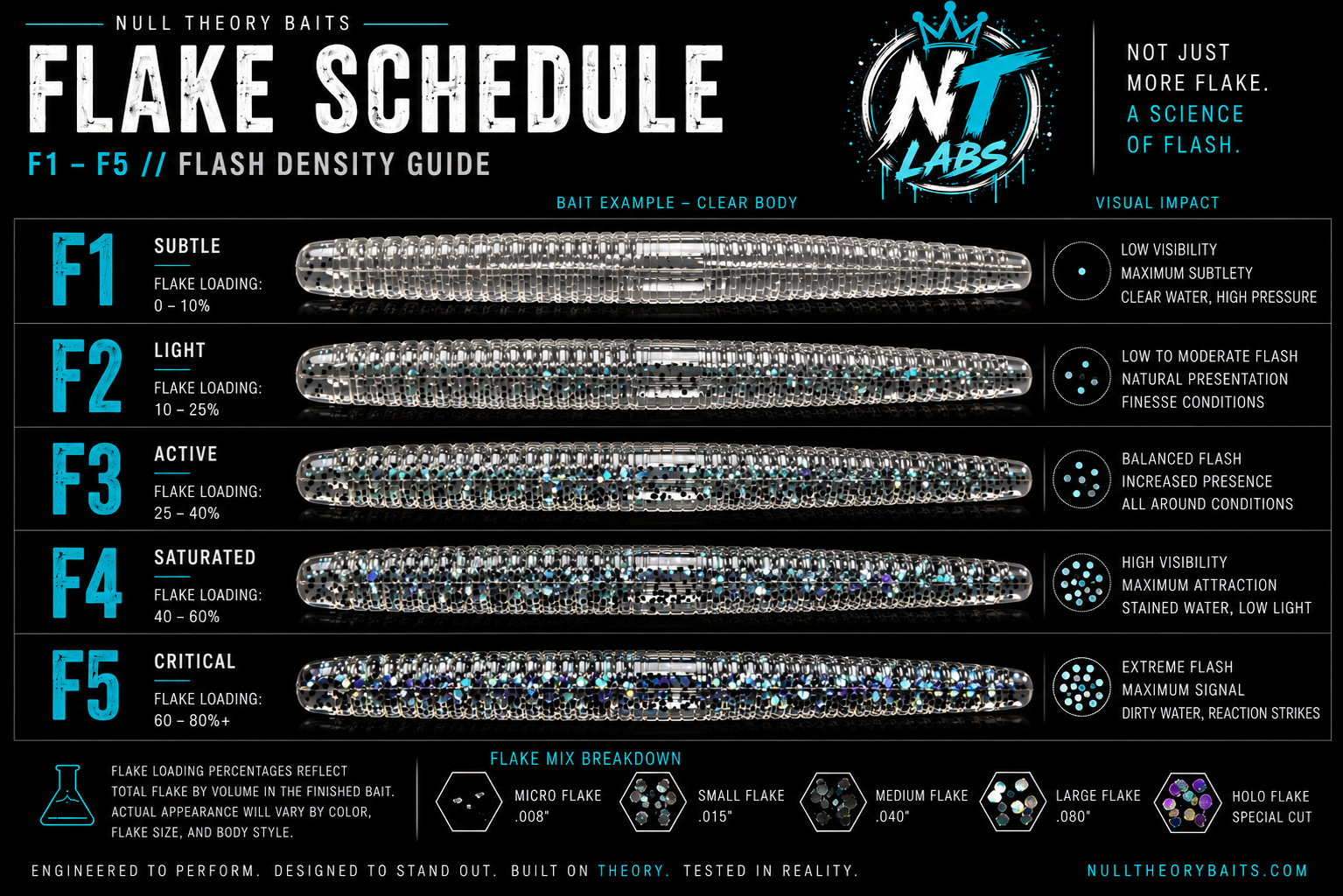
One of the things we're building into NULL THEORY is a standardized flash-density system.
F1 // SUBTLE F2 // LIGHT F3 // ACTIVE F4 // SATURATED F5 // CRITICAL
Instead of simply calling a bait "heavy flake," we want to define it, test it, and determine where flash helps—and where it becomes too much.
The graphic shows the conceptual F1–F5 progression. Actual loading formulas will be established through NULL LABS testing.
And yes... we're probably going to put an absolutely irresponsible amount of holographic flake into F5.
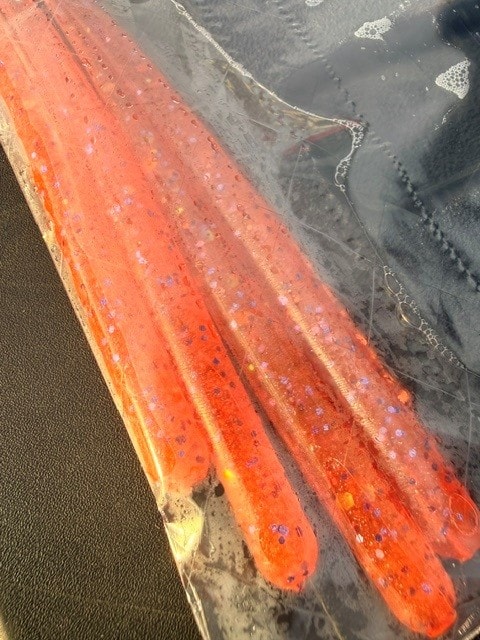
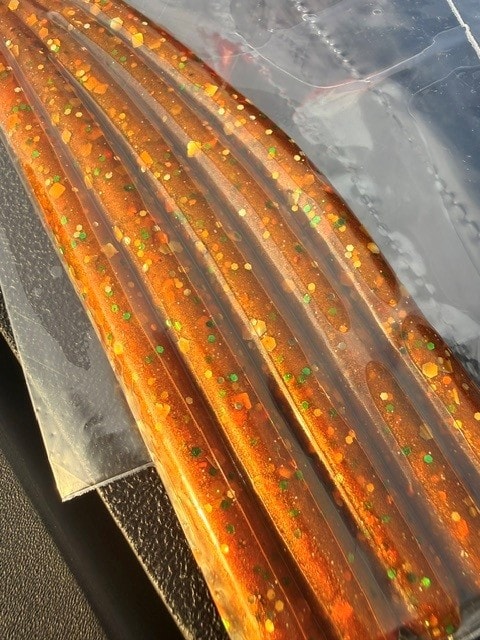
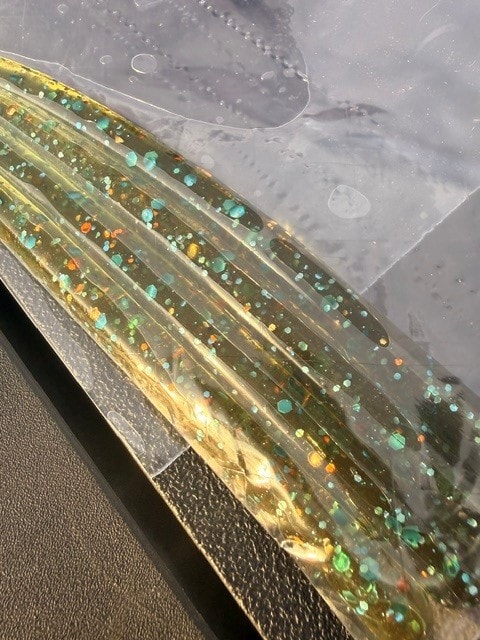
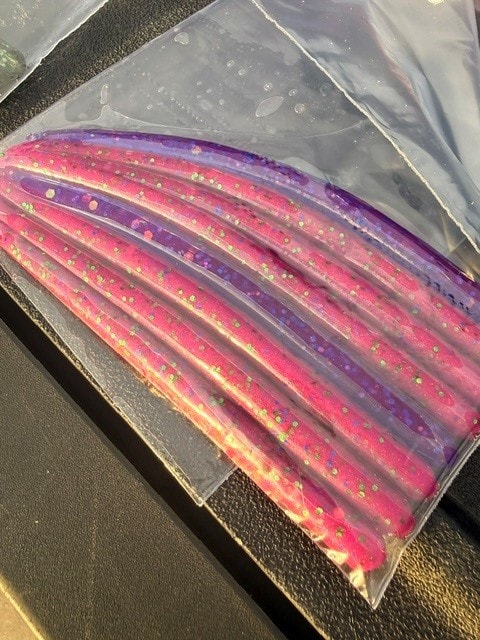
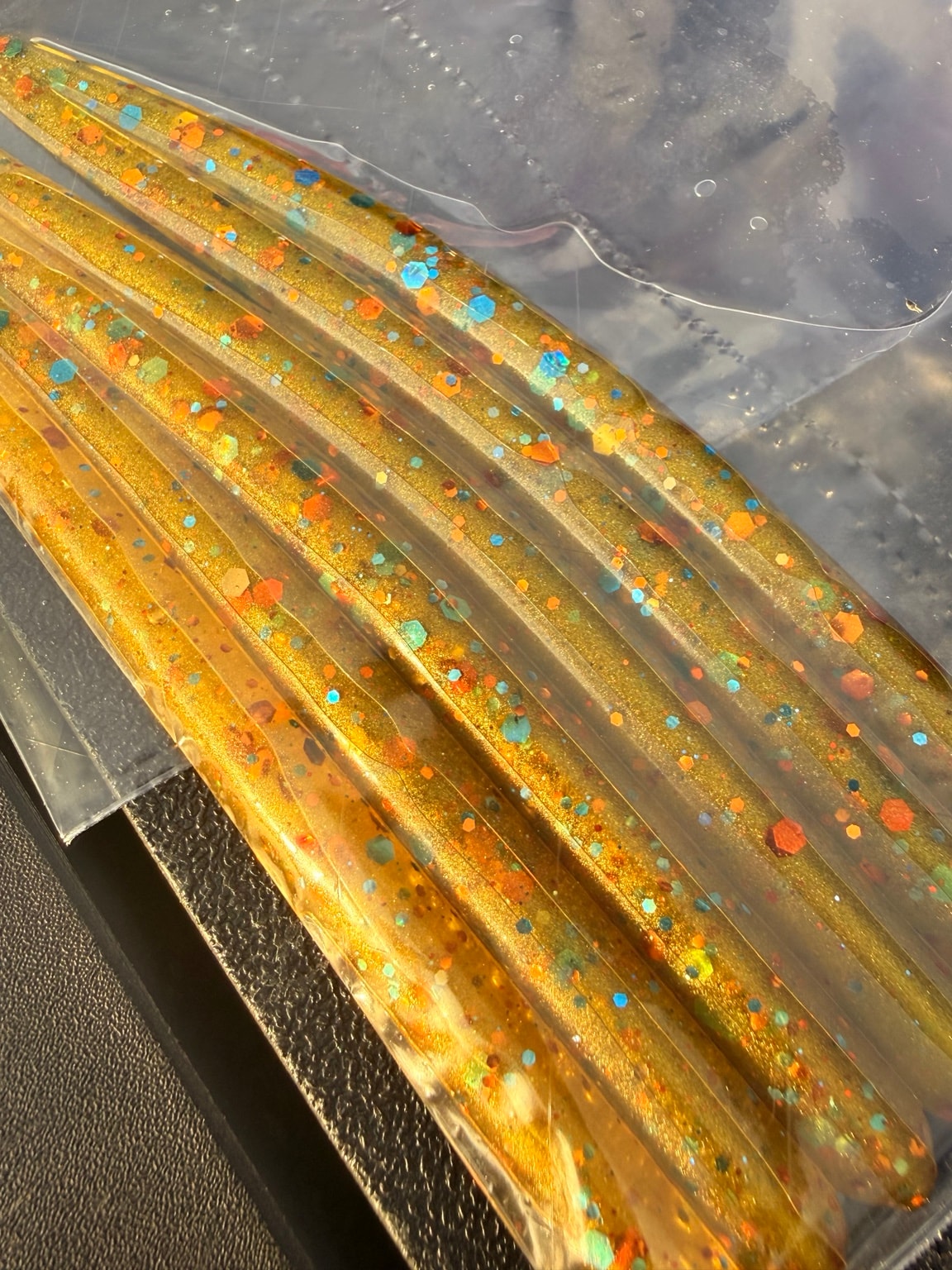
Evaluate multiple experimental color and flake combinations under real fishing conditions, with emphasis on fish response, strike speed, and overall effectiveness of the Theory Worm profile.
Multiple experimental colors were fished under the same general conditions - in two bodies of water on different days. Each color successfully produced fish, confirming the effectiveness of the Theory Worm's profile and action. The bait demonstrated exceptional movement in the water and produced strikes across the tested color range.
One experimental formulation (T6 - pictured above) produced the most notable result. During testing on a body of water historically dominated by topwater presentations, each color was given four casts, in different areas of the body of water, using different techniques (1. Wacky Rig, 2. Texas Rig, 3. Drop Shot, 4. Ned Finesse) creating different presentations. All tested colors produced at least one fish.
The T6 formulation produced a fish on all four presentations — 4/4 — with strikes occurring almost immediately.
Translucent gold/amber body with high-visibility mixed flash, including aqua/blue and orange holographic elements.
The T6 formulation demonstrated a noticeably stronger immediate reaction response than the other experimental colors during this test. Based on observed field performance, the formula has earned consideration for inclusion in the initial Null Theory Baits production color lineup.
The Theory Worm itself performed exceptionally well. Its profile generated pronounced action in the water and successfully produced fish across every tested color combination.
Reproduce the gold formulation as closely as possible and conduct additional controlled field testing across different water clarity, light, depth, and weather conditions.
The theory survived contact with reality. Now we test it again.
FIELD UPDATES
"Dude...absolutely one of the best worms I've ever used. The action is sooo good! Bass hit hard. This color combo is unreal. Will buy several bags when you finally are live!! Thanks for letting me test it!"
"Listen, I've fished almost everything out there. Literally. And I have not ever had the action I got using these worms. Honestly, I'm shocked. The XL wacky rigged killed it. I can't wait for you to go live!"
"We fish bass down here. Lochloosa has the state record in it. I've been hunting him for years. I am confident I had him hooked on the XL in Element 79 that you sent me, using it wacky rigged. My gear failed (snapped line). These fish different. They're good. Really good. Excited to get a whole bunch soon. Back to hunting. Good thing I have one more of those worms you sent me!"
"Hey man. Wanted to let you know how my first day on the lake with your baits went. To say great, would be selling it short! I tested all 3 colors of the Theory Worm you sent (Solar Flare, Static, Green theory) and of Theory XL (Deep Field, Element 79, Red Shift). They all caught that day. Two sessions. One in the AM, I used the smaller Theory Worm, afternoon, I went with Theory XL. These colors are different when they hit the water. In a good way. They are so obvious and noticeable without being gawdy or tacky. I really like the way you do that. Seems like everything reflects and changes the light, which is good when it comes to fooling bass. The XL is a tank of a bait, and landed me several fatboy bass. That Red Shift in the XL is sick. Literally every cast in, one was caught. Very impressed, brother! Keep up the great work."
"My initial impression was great. They are very well made, and I could tell right away that you color your baits differently than I've really ever seen. The worms performed very well. Alum Lake is primarily a smallmouth lake, but there are plenty of largemouth as well. I had a 20lb day. The Green Theory was the most interesting to me — when it got into the water, it becomes so natural looking. And the movement of those baits is incredible! Doesn't take much twitch to make it dance. Element 79 was damned effective too. Overall, I'm very excited to see what happens moving forward and am grateful for the opportunity. Thank You!"
"Francis Case is widely regarded as the best bass lake in SD — bass, walleye, pike, crappie, paddlefish. You sent me Static, Dark Matter and Red Shift in both Theory Worm and XL. Static was an absolute KILLER. I caught bass, walleye and a pike on that bait. It's got a worm profile and a baitfish color and that's why I think it works so well. Red Shift was a very close #2 — it's a beautiful bait, and the bass (large and small) really liked it. Theory Worm was fantastic dropshot and Texas rigged. XL wacky rigged was great too. You make great stuff!"
"I'll be honest — I was skeptical. On the Fork we usually throw 8"-13" baits. These were significantly smaller than what I'm used to. But I'm dead shocked at how well they did. Theory XL is a different story entirely. It's a tapered stickbait that isn't really a stickbait — a niche worm for sure, but man does it kill. Void is the king. Couldn't tell if it wanted to be a silhouette bait or a flash bait. In the water, it's both somehow. Element 79 landed the biggest fish of the day at 8.74lbs. Green Theory is special too — not sure how you made a bait that looks that natural in the water. Can't wait for the next round. Keep up the great work!"
WANT IN ON THE NEXT DROP?
ANOMALY drops come straight from the lab. Get on the waitlist before the next experiment ships.
VIEW ANOMALIES